The Complete Guide To Toggle Clamp
Toggle clamps are mechanical tools that hold workpieces firmly in place with a simple lever action. They lock materials down quickly and release them just as fast, making them essential in workshops, factories, and home projects. These clamps use a handle mechanism that creates strong holding pressure when you flip it into the locked position. Toggle clamps give you a fast, repeatable way to secure materials without constantly adjusting bolts or screws, which saves you time and keeps your workpieces positioned exactly where you need them. They come in many styles and sizes to match different jobs. Some push down on materials, while others pull or hold sideways. When you understand how toggle clamps work and which type fits your needs, you can improve your work speed and accuracy. This guide covers everything from basic types to choosing the right clamp for your specific application. Key Takeaways Toggle clamps use a lever mechanism to quickly secure and release workpieces without constant adjustments Different toggle clamp types serve specific purposes, from vertical holding to horizontal pulling applications Selecting the right toggle clamp depends on your holding force requirements, mounting space, and material type What Are Toggle Clamps? Toggle clamps are mechanical
What Is A Pull-push Toggle Clamp? Best Answer
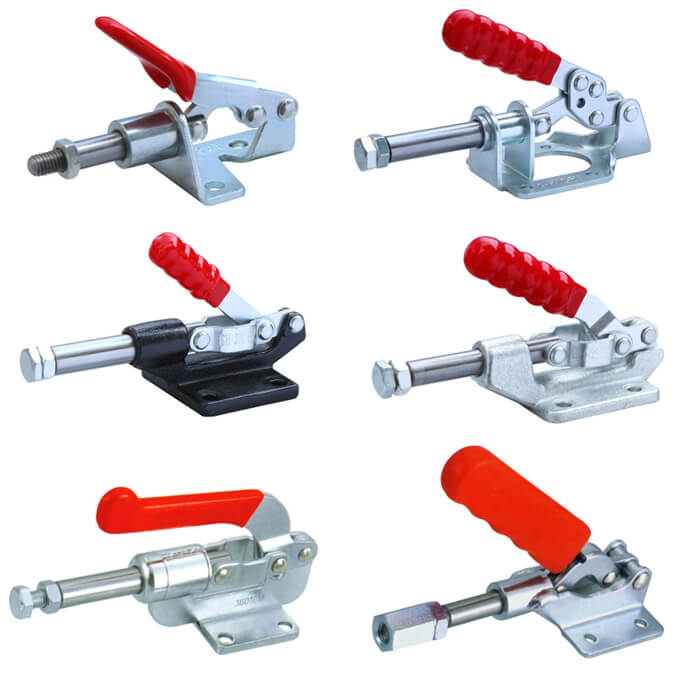
A pull-push toggle clamp is a mechanical workholding device that secures objects through a straight-line motion, capable of both pushing and pulling actions. This versatility makes it ideal for various applications where clamping in multiple directions is necessary. Understanding the Functionality of Pull-Push Toggle Clamps These clamps, also known as straight-line action clamps or plunger-style clamps, operate using a sliding plunger mechanism. This mechanism moves in and out along the clamp’s axis, allowing it to either push objects away or pull them towards the clamping point. The design incorporates a toggle mechanism that amplifies the applied force, ensuring a firm hold with minimal manual effort. The key to their effectiveness lies in a linkage system featuring pivot points and levers. This system converts small handle movements into significant clamping force. When engaged, the pins align horizontally in the clamped position, directing force along the links. The handle moves perpendicularly to this force, enabling easy locking and unlocking. Key Features and Capabilities of Pull-Push Toggle Clamps Pull-push toggle clamps offer several advantages that make them a popular choice in various industries: Dual-Position Locking: They can lock in two positions, allowing them to function as either push or pull clamps, adapting to diverse application needs. Load
What Is A Vertical Toggle Clamp? Best Answer
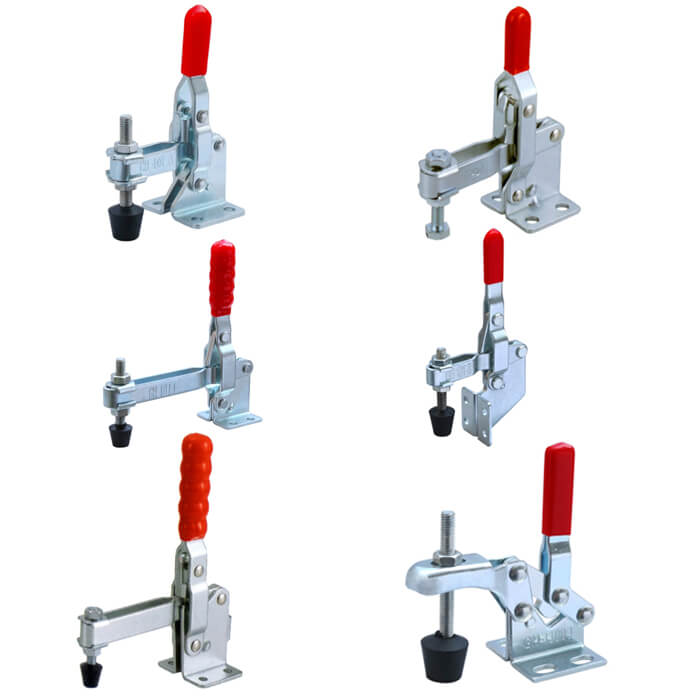
A vertical toggle clamp is a manual workholding tool designed to securely fasten workpieces in place by applying downward clamping force. It’s a fundamental component in various manufacturing processes, providing a reliable and efficient way to hold materials during machining, welding, assembly, and more. Understanding the Vertical Toggle Clamp Vertical toggle clamps are characterized by their vertically oriented handle, which moves up and down to engage and disengage the clamping mechanism. This design offers a compact horizontal footprint while requiring vertical clearance for handle operation. Key Components A vertical toggle clamp consists of several key components that work in unison: Handle: The lever used to activate the clamping action. Pivot Point (Spindle): The central point around which the mechanism pivots. Clamping Arm: The arm that moves to apply pressure to the workpiece. Base Plate: Provides a stable foundation for the clamp. Clamping Pad: The part that directly contacts the workpiece, often featuring a rubber tip to prevent damage. Design and Operation Explained In the released position, the handle typically lies flat and parallel with the clamping arm. Pulling the handle upward engages the clamping mechanism. The pivot point pulls the clamping arm down, applying downward pressure onto the workpiece. This simple two-position design makes the
What Is A Horizontal Toggle Clamp? Best Answer
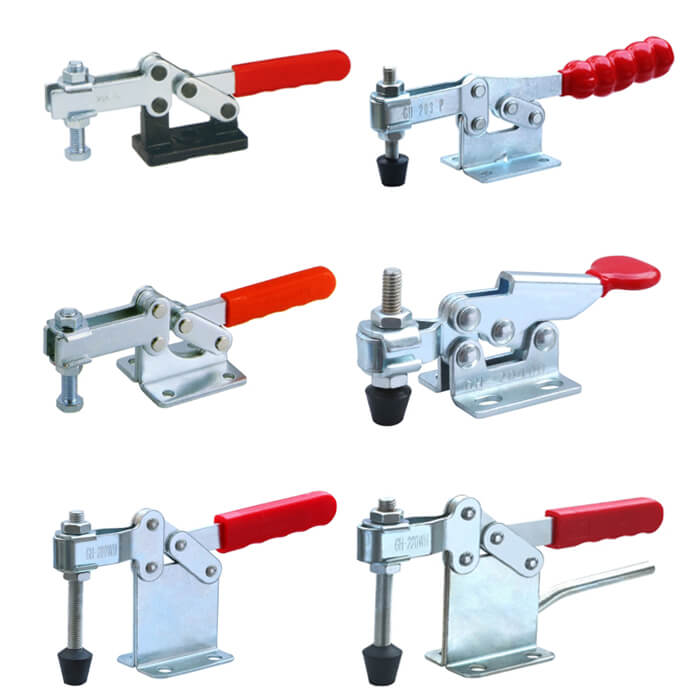
A horizontal toggle clamp is a specialized clamping tool designed to securely hold workpieces in place, particularly in environments where space is limited. Its defining feature is the handle’s horizontal orientation when engaged, offering efficient clamping force while maintaining a low profile. These clamps are indispensable in manufacturing, woodworking, and machining for their ease of use and space-saving design. Understanding the Design and Mechanism of Horizontal Toggle Clamps Horizontal toggle clamps are composed of several key components working in concert. These include a handle, a pivot point (also known as a spindle), a clamping arm, a base plate, and a clamping pad. (Source: Monroe Engineering). The handle, when in the locked position, lies flat and parallel to the clamping arm. This design allows the clamp to exert downward pressure, making it ideal for situations where overhead clearance is restricted. The clamping mechanism is based on a system of connected levers and pivot pins. (Source: Roche Clamp). When the handle is engaged, the clamping arm pivots, applying pressure to the workpiece. This toggle action effectively multiplies the force applied to the handle, generating a significant clamping force. This mechanical advantage is a critical aspect of their efficiency. Key Characteristics: Holding Capacity,
Top 5 Toggle Clamps Suppliers In Switzerland
Toggle clamps play a crucial role in various industrial applications, from woodworking to metalworking and manufacturing.
Top 5 Toggle Clamps Suppliers In Turkey
Toggle clamps play a crucial role in various industrial applications, from woodworking to metalworking and manufacturing.